Reality check on Low / No Cal Sweeteners
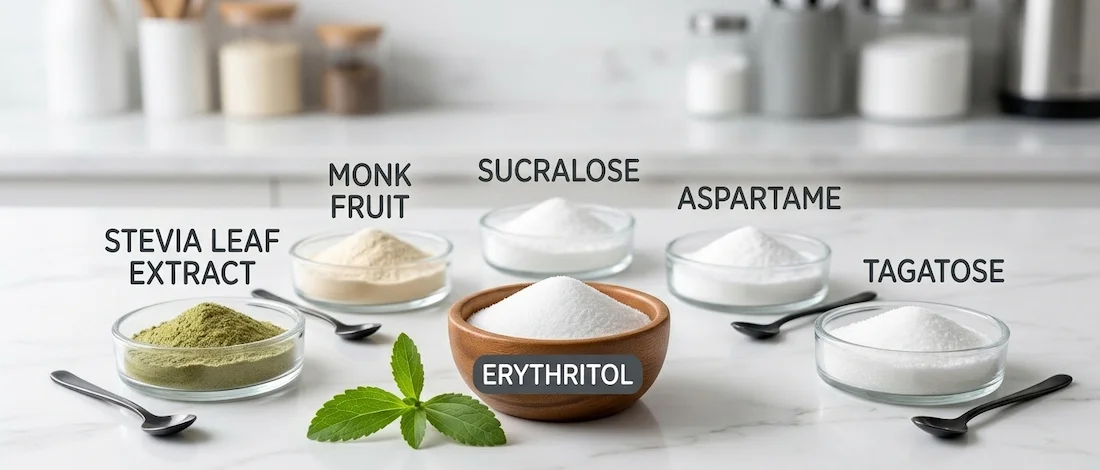
Celebrations or festivities are just incomplete without sweets. Diabetics, those who are obese, or weight watchers often feel guilty whenever they indulge in sweets. A solution for this guilt: low-calorie and no-calorie sweeteners. But are they healthy?
A sweet preparation is a must at times of merry-making. Sugar and its products serve as the most widely used sweeteners for these preparations, but they are high in calories and have other side effects. To combat this negative effect, low- or no-calorie sweeteners are gaining popularity because they can help us cut down on calories, control weight, and manage chronic conditions like diabetes.
FDA-Approved Artificial Sweeteners
To date, the Food and Drug Administration (FDA) has approved six high-intensity artificial sweeteners: aspartame, saccharin, acesulfame-K (Ace-K), neotame, sucralose, and advantame. Additionally, stevia extract (steviol glycosides) has GRAS (Generally Recognised as Safe) status.
Common Artificial Sweeteners
Aspartame (marketed as Sugar-Free Gold®, Equal®): Aspartame is 200 times sweeter than sugar, with calories the same as sugar, i.e. 4 kcal/gram. However, since the amount of aspartame used is pretty low, people consider it free of calories. In July 2023, the WHO's International Agency for Research on Cancer (IARC) classified aspartame as "possibly carcinogenic to humans" (Group 2B) based on limited evidence, though the FDA and other regulatory agencies maintain it is safe at current consumption levels. People suffering from phenylketonuria (a rare genetic condition) should avoid aspartame completely. Acceptable Daily Intake (ADI): 50 mg/kg body weight (FDA) or 40 mg/kg (WHO).
Saccharin (Sweet'N'Low®, SugarTwin®): It does not contain any calories, does not raise blood sugar levels, and its sweetness is 200-700 times sweeter than sugar. ADI: 5 mg/kg body weight.
Acesulfame-K (Sunnet®, Sweet One®): Acesulfame-K is 200 times sweeter than sugar, with no calories. The body does not break it down; the kidneys eliminate it unchanged. Therefore, diabetic patients may safely use the product without it affecting their blood glucose levels. ADI: 15 mg/kg body weight.
Neotame: One of the newer low-calorie sweeteners, neotame is approximately 7,000-13,000 times sweeter than sugar. ADI: 0.3 mg/kg body weight.
Advantame: Approved by the FDA in 2014, advantame is approximately 20,000 times sweeter than sugar and is stable at high temperatures. ADI: 32.8 mg/kg body weight.
Sucralose (Splenda®, Sugar-Free Natura®): Sucralose is the only non-calorie sweetener that manufacturers create from real sugar. To produce sucralose, manufacturers alter the sugar molecule, making it 600 times sweeter than sugar. The body does not digest, absorb, or metabolise sucralose for energy. As a result, it does not affect blood glucose levels, making it safe for diabetics. ADI: 5 mg/kg body weight (FDA) or 15 mg/kg (WHO).
Stevia (Sugar-Free Herbvia®, Uber Natural sweetness®): A natural alternative sweetener, stevia is a herb extract that is much sweeter than sugar (200-400 times) and calorie-free. The FDA has approved certain purified steviol glycosides as GRAS. ADI: 4 mg/kg body weight.
Tagatose: Tagatose has GRAS status in the US. It is derived from lactose, a carbohydrate present in dairy products. It provides 1.5 kcal/g in the US (2.4 kcal/g in the EU) and is about 90% as sweet as sugar. Unlike sugar, the body does not fully absorb tagatose, so it has a reduced caloric impact and does not significantly affect blood glucose levels. ADI: 7.5 mg/kg body weight (EFSA).
Monk Fruit Extract (Luo Han Guo): A natural sweetener derived from a small melon native to southern China, monk fruit extract is 150–250 times sweeter than sugar with zero calories. It gets its sweetness from naturally occurring compounds called mogrosides, not from fructose or glucose, so it does not raise blood sugar levels. The FDA has granted it GRAS status. It is gaining popularity in India as a natural, diabetic-friendly alternative to both sugar and synthetic sweeteners, and is increasingly available in health stores and online. It has no known side effects at normal consumption levels and leaves a relatively clean aftertaste compared to stevia.** ADI: Not formally established (GRAS status implies safety at normal use levels).**
Comparison Table
| Sugar Substitute | Heat Stability | Calories | After Taste | Usage for Cooking |
|---|---|---|---|---|
| Aspartame | Unstable | 4 kcal/g | Sweet | Not suitable for high temperature |
| Saccharin | Stable | Zero | Bitter/Metallic | Not suitable for high temperature |
| Acesulfame-K | Stable | Zero | Bitter | Suitable for high temperature |
| Neotame | Stable | Zero | Slight bitter | Suitable for high temperature |
| Advantame | Stable | Zero | Clean | Suitable for high temperature |
| Sucralose | Stable | Zero | No aftertaste | Suitable for high temperature |
| Stevia | Stable | Zero | Slight bitter | Suitable for high temperature |
| Monk Fruit | Stable | Zero | Clean/Mild | Suitable for high temperature |
| Tagatose | Stable | 1.5 kcal/g (US) | None | Not suitable for high temperature |
Important Facts about Sugar Substitutes
• Cancer Risk: Most regulatory agencies, including the FDA and European Food Safety Authority, have concluded that approved sweeteners are safe at current consumption levels. However, in 2023, the WHO's IARC classified aspartame as "possibly carcinogenic" based on limited evidence, while simultaneously reaffirming its safety at current intake levels. The scientific community continues to monitor research in this area.
• Gut Microbiome Effects: Emerging research suggests that some artificial sweeteners may influence gut microbiota composition. A 2022 study published in Cell found that saccharin and sucralose, in particular, caused measurable changes in gut bacteria in some individuals. While the clinical significance of these findings is still being studied, it is worth being mindful of frequent, high-dose consumption of these sweeteners. Research in this area is active and evolving.
• Other Health Effects: Current evidence does not conclusively link approved sweeteners to chronic diseases beyond what is noted above. They can be a useful tool in managing calorie and carbohydrate intake — particularly for people with diabetes or obesity. That said, some emerging research raises questions about metabolic effects and gut health, so moderation and ongoing awareness of new findings is advisable.
• Pregnancy and Nursing: All approved sweeteners are considered safe for pregnant and nursing mothers at normal consumption levels. However, physicians or dietitians recommend seeking their advice for personalised guidance.
• Individual ADI Levels: Each sweetener has its own specific Acceptable Daily Intake (ADI) level set by regulatory agencies. These levels represent the amount that can be safely consumed daily over a lifetime without adverse effects. The ADI varies significantly between sweeteners.
Unapproved Sweeteners
Sugar substitutes not yet approved by the FDA include Alitame (Aclamate) and Cyclamate (currently banned by the FDA in the United States but approved in many other countries).
Author's take on Sugar Substitutes: No artificial sweetener should play a major role in a healthy diet. Each sweetener has a specific maximum acceptable daily intake based on body weight. For example, for aspartame (ADI: 50 mg/kg), a 50 kg person could safely consume up to 2.5 grams per day, while for saccharin (ADI: 5 mg/kg), the same person should limit intake to 250 mg per day.
All the above-mentioned sweeteners are considered safe today based on current scientific evidence, but ongoing research continues to evaluate their long-term effects. Like sugar, sugar substitutes also contribute little or nothing in the form of nutrients and may replace more nutritious foods in the diet. People should use them judiciously and avoid making them a part of everyday life. A balanced diet rich in whole foods remains the best approach to health.

Shruti Marjara Kushwaha
Nutritionist & Founder, NutriMantra
Shruti blends evidence-based nutrition with practical Indian food guidance, shaped by experience across AIIMS, VLCC, HealthKart, research, counselling, and long-term lifestyle support.
Looking for a sustainable way to lose weight without cutting out real food?
Shruti helps turn nutrition advice into a realistic plan you can follow at home, at work, and while eating out.
Frequently Asked Questions
Are low-calorie sweeteners safe for diabetics in India?
Can I use artificial sweeteners in traditional Indian sweets?
What are the health risks associated with artificial sweeteners?
How can I incorporate low-calorie sweeteners into my daily diet?
Learn with Shruti


Related Articles
Flavour without Fat
Fat, apart from adding on calories also adds on to taste to our dishes. Dollops of butter melting on pao bhaji or saag make them all the more delicious.
Read article →
Are You Cooking the Nutrition Out of Your Food?
Cooking doesn’t automatically drain nutrition. Use less water, avoid overcooking, and remember that dal, sambar and curries retain nutrients in their cooking liquid.
Read article →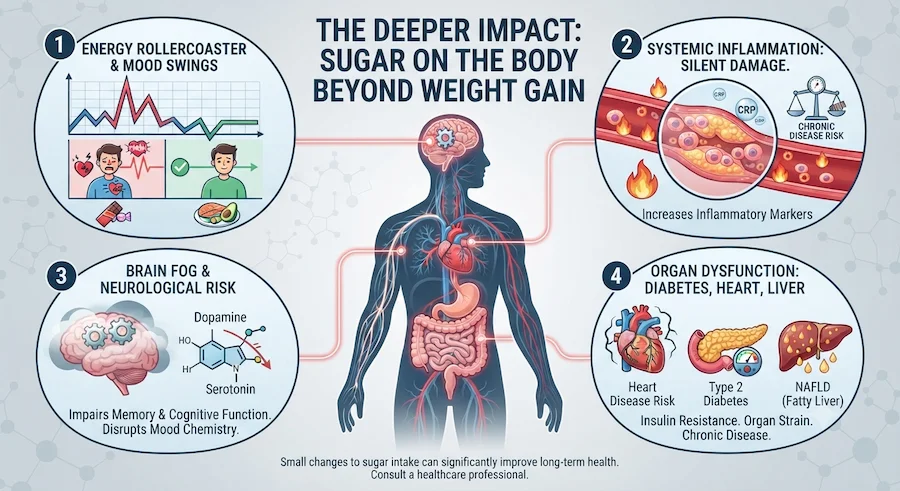
The Impact of Sugar on Your Body: Beyond Weight Gain
Cutting added sugar can smooth energy swings and help brain clarity; in India, swap sweetened coffee and juices for fruit, protein, and fiber.
Read article →Comments (2)
Leave a Comment
Your comment will appear after moderation.
shweta jain · Sep 14, 2014 03:23 PM
very informative
Shruti Marjara Kushwaha · Mar 22, 2026 02:11 PM
Reply
Thank you so much.