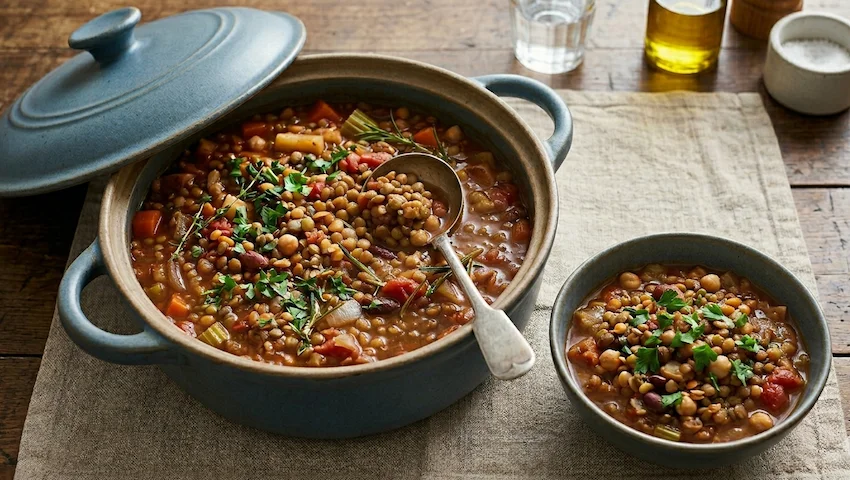
Pulses Hotpot
The recipe calls for the use of different pulses. Pulses provide protein and dietary fibre, and like other plant-based foods, they contain no cholesterol and little fat or sodium. Pulses also provide iron, magnesium, phosphorus, zinc, and other minerals, which play a variety of roles in maintaining good health. They also contain phytochemicals, which may reduce the risk of certain types of cancers and other diseases. This Pulses Hotpot is really a pot of good health.
Nutrition Snapshot
Health Condition Suitability
Quick guidance based on this recipe's ingredients and nutrition profile.
Recommended is generally suitable,
Moderate means portion/frequency should
be controlled,
and Avoid means usually not preferred for
that condition.
Individual tolerance varies.
Ingredients
Main Ingredients
- 50.0 g Soybean
- 50.0 g Chickpeas
- 50.0 g Black-eyed beans
- 50.0 g Kidney beans (All soaked for a minimum of 4 hours)
For Tempering
- 3.0 medium Onion (chopped)
- 4.0 medium Tomato (chopped)
- 6.0 clove Garlic cloves (crushed)
- 1.0 tbsp Ginger (chopped)
- 1.0 tbsp Coriander powder
- Salt & Red Chilli (to taste)
- Oil (for tempering)
For Garnish
- Fresh Coriander Leaves (a few, chopped)
Legend: tsp = teaspoon, tbsp = tablespoon, cup = 150 ml, g = gram, pinch = the amount that you can pick between your forefinger and thumb.
Method
- Soak all the legumes (soybeans, chickpeas, black-eyed beans, and kidney beans) for at least 4 hours or overnight.
- Pressure cook the soybeans, chickpeas, and black-eyed beans together until tender. Cook the kidney beans separately until soft. Drain and set aside.
- Heat oil in a pan, add chopped onions, and sauté until they turn light pink and translucent.
- Add chopped tomatoes and cook until soft and slightly mushy.
- Stir in crushed garlic, chopped ginger, coriander powder, salt, and red chilli powder. Cook for 2–3 minutes until the spices are well blended.
- Add the cooked legumes along with about half a bowl of water. Mix well.
- Cover and simmer for a few minutes until the flavours combine, ensuring the mixture remains moist but not overly mushy.
- Garnish with fresh coriander leaves and serve hot.
Tips
- This recipe combines a variety of legumes, offering a diverse range of plant proteins, fibre, and micronutrients. Such combinations can support gut health and improve satiety, but may be heavy for sensitive digestion. Proper soaking and cooking help enhance nutrient absorption and reduce digestive discomfort.
Watch & Learn



Shruti Marjara Kushwaha
Nutritionist & Founder, NutriMantra
Shruti blends evidence-based nutrition with practical Indian food guidance, shaped by experience across AIIMS, VLCC, HealthKart, research, counselling, and long-term lifestyle support.
Dealing with bloating, sluggish digestion, or a sensitive gut?
A personalised consultation can help you identify practical food patterns, fibre balance, and meal structures that feel better.
Frequently Asked Questions
What are the health benefits of including pulses in my Indian diet?
How can I incorporate more pulses into my daily meals in India?
Are pulses suitable for people with diabetes in India?
What are some common myths about pulses in Indian cuisine?
Comments (1)
Leave a Comment
Your comment will appear after moderation.
Ajeet · Feb 14, 2020 09:52 PM
Seems healthy and tasty - will surely give it a shot.