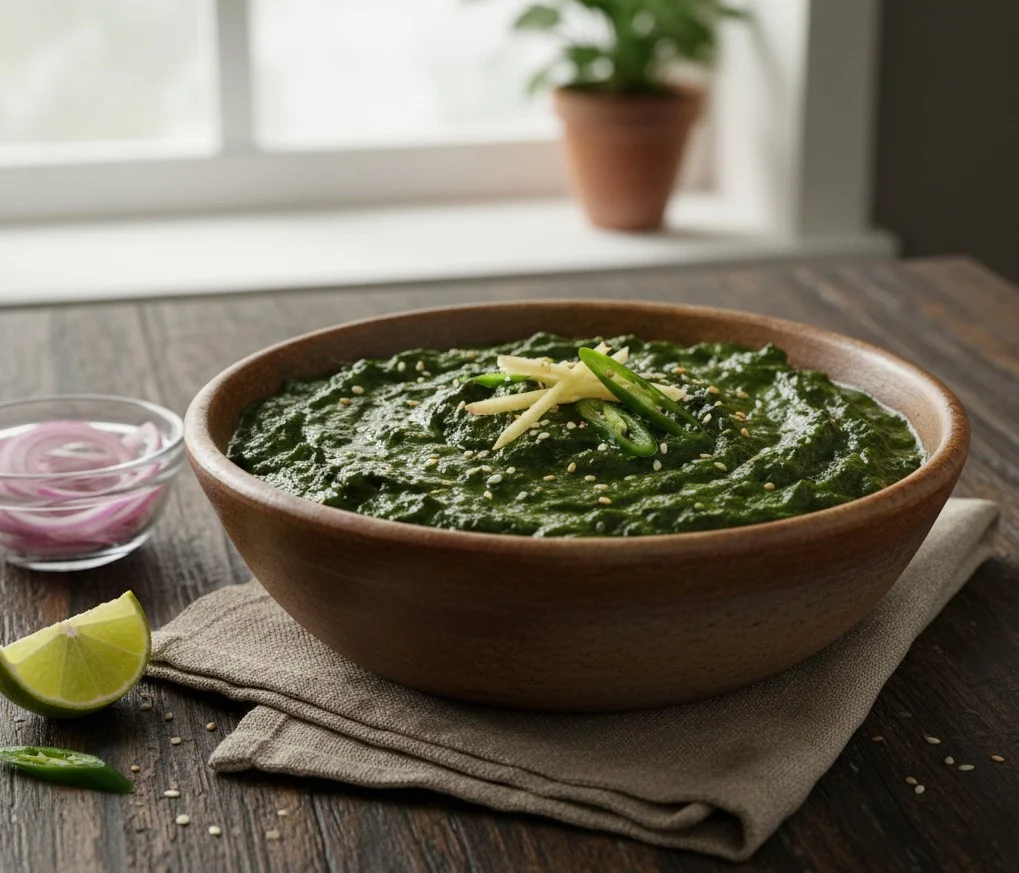
Sarson Ka Saag
A traditional winter preparation from North India, sarson ka saag is a nutrient-dense dish made primarily from mustard greens, along with spinach and bathua. Rich in dietary fibre and packed with vitamins C and K, this dish also provides iron, folate, calcium, and manganese, supporting immunity, bone health, and overall metabolic function. The natural antioxidants and anti-inflammatory compounds in mustard greens, combined with their potassium content, make sarson ka saag beneficial for heart health and digestion. Slow-cooked and finished with a simple tempering, it is a wholesome, seasonal dish that balances flavour with nourishment.
Nutrition Snapshot
Health Condition Suitability
Quick guidance based on this recipe's ingredients and nutrition profile.
Recommended is generally suitable,
Moderate means portion/frequency should
be controlled,
and Avoid means usually not preferred for
that condition.
Individual tolerance varies.
Ingredients
Main Ingredients
- 150.0 g Mustard Leaves ( sarson )
- 50.0 g Spinach ( palak )
- 25.0 g Bathua
- 2.0 clove Garlic
- 0.5 Green Chilli (or as per taste)
- 5.0 g Ginger
- 10.0 g Makki ka atta
For Spice Mix
- Salt (to taste)
- 0.5 tsp Red Chilli Powder
For Tempering
- 20.0 g Onion
- 0.5 Green Chilli (1/2 chilli)
- Asafoetida ( hing ) (a pinch)
- 1.0 tsp Ghee
Legend: tsp = teaspoon, tbsp = tablespoon, cup = 150 ml, g = gram, pinch = the amount that you can pick between your forefinger and thumb.
Method
- Clean (remove hard stems) and wash sarson, bathua and palak thoroughly.
- Roughly chop the greens.
- Chop garlic, ginger and green chilli finely. Put all the ingredients (except the ones for tempering), along with salt and pressure cook.
- 1 whistle on medium flame, then simmer for 3–4 minutes on low flame. Turn off the heat and allow pressure to release naturally.
- Once cooled slightly, mash using a wooden churner until the mixture is coarse and creamy.
- Return the saag to low heat. Sprinkle 1–2 teaspoons corn atta gradually while stirring continuously to avoid lumps.
- Simmer for 8–10 minutes, stirring frequently, until slightly thickened.
- In a separate vessel, heat ghee. Add hing, finely chopped onion and green chilli. Sauté until golden brown.
- Turn off the heat and add red chilli powder.
- Pour the hot tempering over the simmering saag.
- Mix well and cook for 1–2 minutes.
- Serve hot with makki roti or phulka.
Tips
- Blend lightly for a rustic texture (do not over-blend into a paste).
Watch & Learn



Shruti Marjara Kushwaha
Nutritionist & Founder, NutriMantra
Shruti blends evidence-based nutrition with practical Indian food guidance, shaped by experience across AIIMS, VLCC, HealthKart, research, counselling, and long-term lifestyle support.
Need help applying this to your routine?
Book a consultation with Shruti for practical, personalised nutrition guidance tailored to your goals, food preferences, and health conditions.
Comments (0)
No comments yet. Be the first to share your thoughts.
Leave a Comment
Your comment will appear after moderation.