Your Kitchen is a Pharmacy - If You Know Where to Look
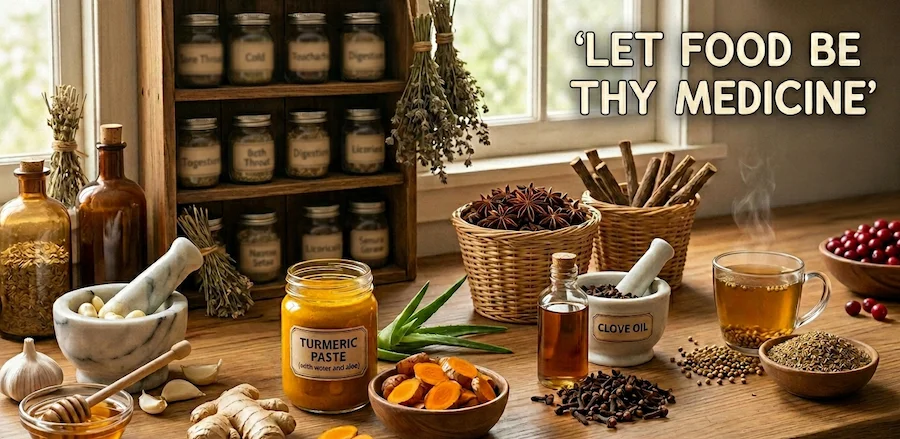
Medicine.... a lifesaver for many, but a habit for some. Do you belong to pop the Medicine like candy group? If so, you should tone down your habit, as your body is slowly becoming immune to the medicines. The medicines might not work when you really want them to. Many of the world's healing traditions have their roots in the kitchen. Hippocrates, the father of medicine, rightly said, 'Let food be thy medicine'. So, for minor hiccups, try these herbal remedies, which might even save a few trips to the doctor.
Sore Throat: a common problem faced by many of us during the winter months or even when we have too much to talk. A simple problem and a simple cure: gargling with salt water and taking in ginger-honey paste. Grate ginger and extract its juice. Mix this juice with honey (1:1 or 1:2 if you cannot tolerate ginger's bitterness) and take it for immediate relief. Ginger has also been considered useful for bronchitis, colds, cough, digestion and flu.
Toothache: Try clove oil or a clove paste if clove oil is unavailable. Clove will immediately numb the gum and also fight infection. Make a thick paste of cloves and apply it as a pack on the affected area for a few minutes. Spit and repeat if needed. Clove oil, if available, can be used in place of clove paste. Cloves also work in nausea, vomiting and other digestive problems. Sucking on a clove can help prevent coughing fits.
Cold: The first line of defence against a cold is keeping you warm, rested, and hydrated. In addition, ingesting raw garlic with honey (either by chewing or swallowing) works wonders for a cold. But it works best when taken at the onset of a cold. Garlic is also useful for asthma, bronchitis, blood circulation, cough, gas, and high blood pressure, among other conditions.
Cough: Anise (choti saunf) is very useful for breaking up mucus and is used for hard, dry coughs where expectoration is difficult. Make a concoction by adding 1 cup of boiled water to 3 teaspoons of crushed seeds and steeping for 20 minutes. Taking in a paste of powdered licorice (mulatthi) mixed with honey or drinking concoction of licorice is also excellent in breaking mucus stuck in the system.
Indigestion: one of the most common remedies is to take two spoons of lime and ginger juice, with honey, mixed in a glass of warm water after a heavy meal. Another effective remedy is to have a teaspoon of roasted Carom (ajwain) seeds along with a pinch of black salt.
Urinary Tract Infections: Lots of researchs has given thumbs-up to cranberry juice for the treatment of UTIs. Though it cannot replace antibiotics, it can still prevent or cure minor infections effectively. Research indicates consuming 1 cup of cranberry juice 3 or more times a day till symptoms subside. A doctor should be contacted in case there is no improvement after 2 days of treatment.
Skin troubles: use turmeric to soothe acne, scrapes, cuts, wounds, blemishes and sunburns. Make a thin paste of turmeric with water / rose water / aloe-vera juice, and apply to the affected area. Leave for some time and rinse. Turmeric also acts as a blood purifier and antiseptic. It can be used internally and externally to heal wounds, relieve limb pain and break up congestion in chest.
A few other herbs of advantage Coriander Seeds (sabut dhania / dhaniye ke beej): Steeped in tea, it is useful for relieving fevers. Cinnamon (dalchini): Very helpful for digestive problems especially when accompanied by gas and cramping. Cinnamon can also be used to treat colds, flu and arthritis. Bay Leaf (tej patta): good to stimulate appetite, promote digestion, relieve colic and flatulence. Black Pepper: The mixture of pepper and honey is useful for treating colds, mucous, and sore throats. Cardamom: Cardamom is often used to treat indigestion and gas.
A word of caution: home remedies work best in the early stages of an illness. When symptoms become acute or persistent, please see a doctor for timely care.

Shruti Marjara Kushwaha
Nutritionist & Founder, NutriMantra
Shruti blends evidence-based nutrition with practical Indian food guidance, shaped by experience across AIIMS, VLCC, HealthKart, research, counselling, and long-term lifestyle support.
Need help applying this to your routine?
Book a consultation with Shruti for practical, personalised nutrition guidance tailored to your goals, food preferences, and health conditions.
Frequently Asked Questions
What are some effective home remedies for a sore throat using Indian ingredients?
How can I treat a toothache naturally with Indian spices?
What are some natural remedies for cold using Indian foods?
What can I use for indigestion from Indian cuisine?
Learn with Shruti


Related Articles
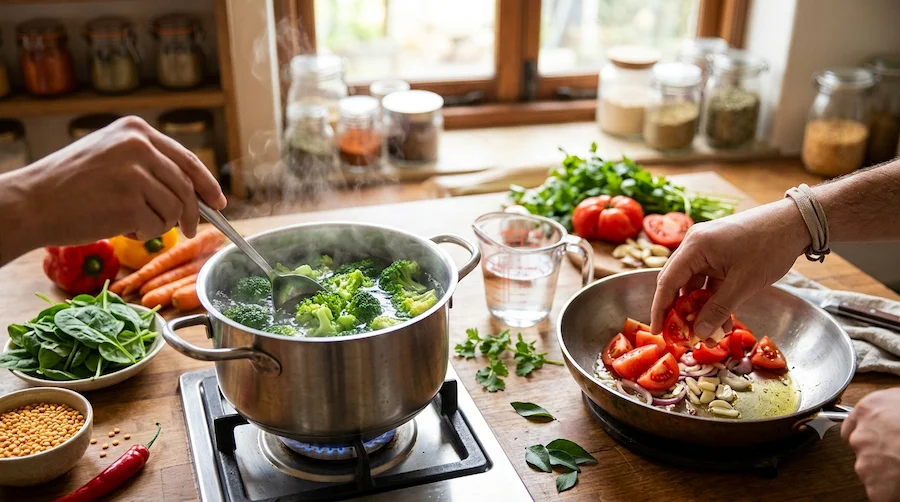
Are You Cooking the Nutrition Out of Your Food?
Cooking doesn’t automatically drain nutrition. Use less water, avoid overcooking, and remember that dal, sambar and curries retain nutrients in their cooking liquid.
Read article →
The Impact of Sugar on Your Body: Beyond Weight Gain
Cutting added sugar can smooth energy swings and help brain clarity; in India, swap sweetened coffee and juices for fruit, protein, and fiber.
Read article →
Menopause & Nutrition: Bones, Weight & What to Actually Eat
> The women who do best through perimenopause aren't the ones who change everything. They understand what's happening and make...
Read article →
Comments (0)
No comments yet. Be the first to share your thoughts.
Leave a Comment
Your comment will appear after moderation.