Food Labels: Reading Between the Lines
Welcome back to the final instalment of our series on reading food labels! Today, we will be talking about how to decipher those enticing label claims and certifications on your favourite food products.
You know, the ones that shout 'natural', 'organic', or 'low-fat' from the front of the package. Let us dig a little deeper and find out what these labels mean, especially in the Indian market.
Reading Food Labels & Decoding Label Claims
Let us talk about some common label claims like 'organic and 'non-GMO'. Organic means the product was grown without synthetic pesticides, fertilisers, or genetically modified organisms (GMOs). In India, this is backed by the National Programme for Organic Production (NPOP).
With more and more Indians getting health-conscious and eco-friendly, non-GMO products are becoming more popular. Non-GMO means the food doesn’t contain any genetically modified ingredients. The Non-GMO Project tells us that over 90% of people worldwide are concerned about GMOs, and this is pushing more brands to be transparent.
Why Standards Matter?
Understanding these labels helps you make choices that fit your values, whether supporting sustainable farming or avoiding GMOs. Did you know that a survey by ASSOCHAM found that the Indian organic food market is growing by 25% every year? That’s a lot of people looking for healthier, more sustainable options!
However, not all label claims are equally credible. Terms like "natural" and "healthy" can be pretty vague. The Food Safety and Standards Authority of India (FSSAI) has issued some guidelines, but it hasn't formally defined "natural." So, it might not always mean what you think.
Trustworthy Certifications
For extra peace of mind, look for certifications from third-party organisations. You might see the India Organic seal, the Non-GMO Project Verified seal, or the PGS-India Organic label. These badges mean the product has met certain criteria set by independent groups.
The India Organic seal shows that the product follows NPOP standards. The Non-GMO Project Verified seal indicates that the product has been thoroughly tested to ensure it is free from GMOs. And the PGS-India Organic label? That one supports local, sustainable farming practices.
Reading Food Labels with a Critical Eye
Even with these certifications, it’s good to stay alert. A survey by the Indian Council of Agricultural Research (ICAR) found that almost 80% of consumers look at labels to make healthier choices, but many get misled by unclear claims. So, always keep your critical thinking cap on!
The following table lets us know what each claim actually means. You may check your food label claims against these conditions to know whether the label is trustworthy or misleading.

Reading food labels and understanding them is key to making smart choices about what you eat. By checking out the ingredients, decoding the nutrition facts, and reading between the lines of label claims and certifications, you can shop confidently and choose foods that support your health and values.
Remember, staying informed and a little sceptical of vague claims will help you pick the best options for you and your family.

Shruti Marjara Kushwaha
Nutritionist & Founder, NutriMantra
Shruti blends evidence-based nutrition with practical Indian food guidance, shaped by experience across AIIMS, VLCC, HealthKart, research, counselling, and long-term lifestyle support.
Need help applying this to your routine?
Book a consultation with Shruti for practical, personalised nutrition guidance tailored to your goals, food preferences, and health conditions.
Frequently Asked Questions
How can I identify organic food products in India?
What does 'natural' mean on food labels in India?
Are non-GMO foods really better for my health?
How can I trust the health claims on food labels?
Learn with Shruti


Related Articles

Are You Cooking the Nutrition Out of Your Food?
Cooking doesn’t automatically drain nutrition. Use less water, avoid overcooking, and remember that dal, sambar and curries retain nutrients in their cooking liquid.
Read article →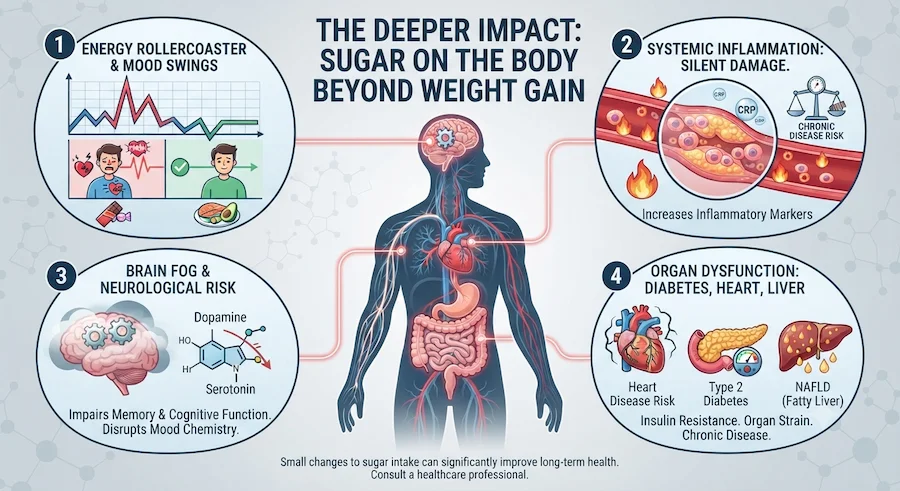
The Impact of Sugar on Your Body: Beyond Weight Gain
Cutting added sugar can smooth energy swings and help brain clarity; in India, swap sweetened coffee and juices for fruit, protein, and fiber.
Read article →
Menopause & Nutrition: Bones, Weight & What to Actually Eat
> The women who do best through perimenopause aren't the ones who change everything. They understand what's happening and make...
Read article →
Comments (0)
No comments yet. Be the first to share your thoughts.
Leave a Comment
Your comment will appear after moderation.