The Food & Mood Link

The thought that might cross your mind after reading the title: is the food I am eating connected with my mood? Yes, it is. There is a close relationship between our brain and our gastrointestinal tract (digestive system), so much so that the digestive system is sometimes referred to as the second brain.
How? Our digestive system houses billions of bacteria. The absolute number surpasses the number of cells we have in our body and if we compare, we are only 10% human and 90% bacteria. These bacteria influence the production of neurotransmitters (chemical substances) that constantly carry messages from the gut to the brain. So if we consume a healthy balanced diet, it promotes the growth of good bacteria, which positively affects neurotransmitter production. But a diet full of processed, refined, rich in refined foods; can cause the growth of bad bacteria that overpower the good ones. When the production of neurotransmitters is good, the brain receives positive messages and the same is reflected in your emotions. But if this production goes haywire, it will affect the mood as well.
Sugar, in particular, is the topmost culprit here. Sugar acts as food for bad bacteria. Consumption of sugar can cause a temporary increase in dopamine the happy neurotransmitter. But this leads to a sudden crash and leads to a terrible mood till sugar is consumed again. This means you are in a loop: foul mood have sugar, crash, and foul mood again. When you stick to a healthy diet, you ensure that you will suffer from fewer mood fluctuations, you will have an overall happier outlook, and an improved ability to concentrate and work.
Foods that keep you healthy
Whole, plant based unprocessed foods like whole cereals, pulses, legumes, beans, fruits and vegetables with peels, help in multiplication and growth of healthy gut bacteria. Prefer following foods and nutrients in your diet to ensure a healthy colony in your gut for a happy mood.
Fiber: Plant-based foods are full of fiber, which helps your body avoid sugar rush and crashes. Fiber takes more time to travel through the digestive system which also slows down the release of sugar (glucose) in the blood. As mentioned above all whole, plant-based unprocessed foods are rich in fiber. eg whole wheat, brown rice, whole pulses, legumes, whole fruits and vegetables, etc.
Antioxidants: These anti-aging substances not only fight free radicals but also help in keeping us happy. They are found in abundance in all the coloured fruits and vegetables (green, purple, yellow, orange, red), spices like turmeric, cinnamon. Do visit the hyperlink if you would like to know more about antioxidants.
Fermented foods: The foods which we have been talking about till now or will do later are food for the bacteria ie prebiotics. But fermented foods are packed with these healthy bacteria and are called probiotics. There are plenty of fermented foods made across various cuisines like Asian has idli, dhokla, kanji, kimchi salad, picked vegetables, curd, yoghurt, which are certain live bacteria that are good for your digestive tract.
Folic Acid: is part of B-complex vitamins and it helps with dopamine production in our bodies. Some of the rich sources of folic acid include beans (kidney beans, cowpea, soybean), pulses (moth beans, Bengal gram), green leafy vegetables (spinach, mint, mustard), beetroot, seafood (sardines, crab, hilsa, salmon) to name a few.
Vitamin D: Vitamin D helps with the production of serotonin. Vitamin D is also called as the sunshine vitamin as our bodies can make vitamin D when the skin is exposed to sunlight. Some of the dietary sources of vitamin D include mushrooms, pomegranate, corn, ragi, hilsa, sardine, eggs, pomfret, etc.
Magnesium: deficiency of this mineral can cause depression and anxiety-like symptoms. So do not forget to include foods rich in magnesium to your diet. Good sources include seeds like (sunflower, sesame, flax), almonds, soybean, ragi, prawns, crabs, tuna rohu, etc.
What should you avoid?
Chemicals like preservatives, food colorings and other additives may cause or worsen hyperactivity and depression. So avoid processed foods because these are the foods with maximum number of additives. also these are the foods with minimal fiber the most important food for our gut bacteria. Sugar, fried food, ready to eat high calorie snacks. These are the kind of foods that can cause addiction and make it difficult to give up.
Few Pointers in the end:
- Be patient with yourself. Rome was not built in a day.
- Incorporate one change at a time, preferably the one which is the easiest. Like of you feel it easist to swap a bag of chips with a handful of nuts and seeds go ahead and so that. When this becomes a habit go ahead and pick another change to be incorporated.
- Be mindful of what you eat because when you take in the taste, texture, aroma and colours of the food you tend to enjoy eating more.
And you thought nutritious food was meant to keep you healthy... no no it is important to keep you happy as well!
Image Courtesy: Pixabay

Shruti Marjara Kushwaha
Nutritionist & Founder, NutriMantra
Shruti blends evidence-based nutrition with practical Indian food guidance, shaped by experience across AIIMS, VLCC, HealthKart, research, counselling, and long-term lifestyle support.
Need help applying this to your routine?
Book a consultation with Shruti for practical, personalised nutrition guidance tailored to your goals, food preferences, and health conditions.
Frequently Asked Questions
How can my diet affect my mood in India?
What Indian foods are best for maintaining a healthy gut?
Is sugar really that bad for my mood?
How can I integrate more fiber into my Indian diet?
Learn with Shruti

Related Articles

Are You Cooking the Nutrition Out of Your Food?
Cooking doesn’t automatically drain nutrition. Use less water, avoid overcooking, and remember that dal, sambar and curries retain nutrients in their cooking liquid.
Read article →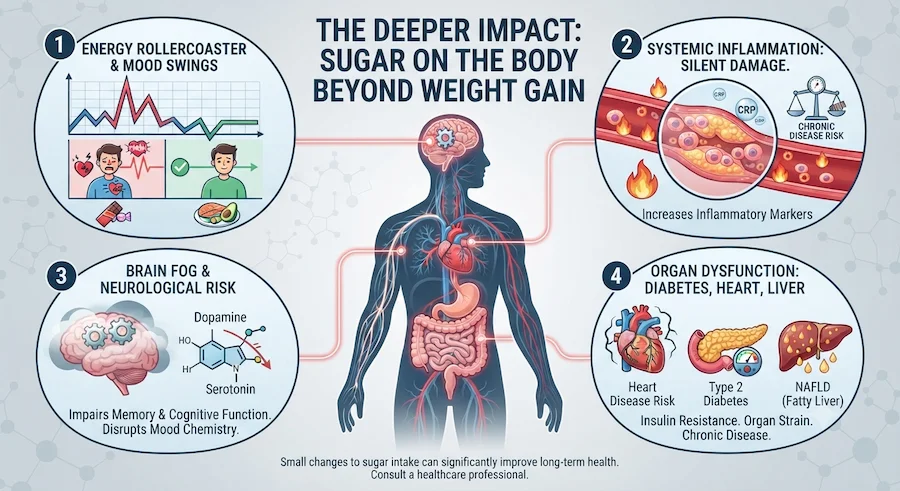
The Impact of Sugar on Your Body: Beyond Weight Gain
Cutting added sugar can smooth energy swings and help brain clarity; in India, swap sweetened coffee and juices for fruit, protein, and fiber.
Read article →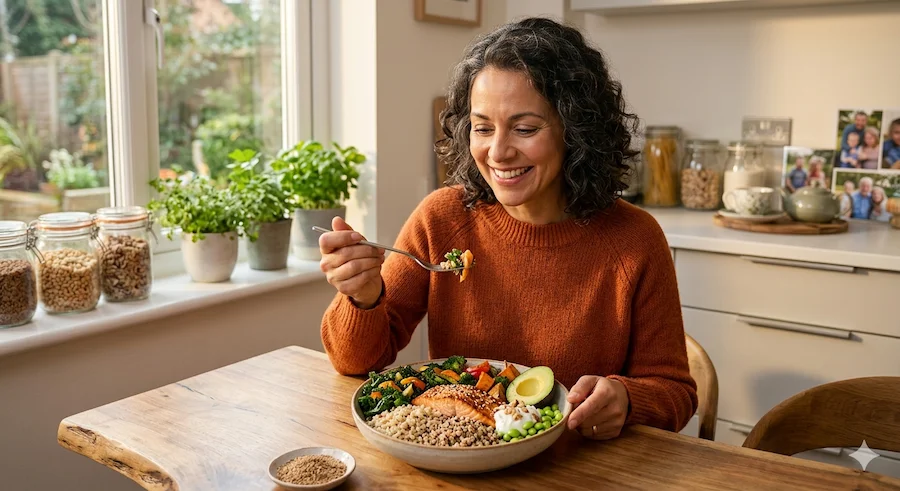
Menopause & Nutrition: Bones, Weight & What to Actually Eat
> The women who do best through perimenopause aren't the ones who change everything. They understand what's happening and make...
Read article →
Comments (0)
No comments yet. Be the first to share your thoughts.
Leave a Comment
Your comment will appear after moderation.