Are You Cooking the Nutrition Out of Your Food?
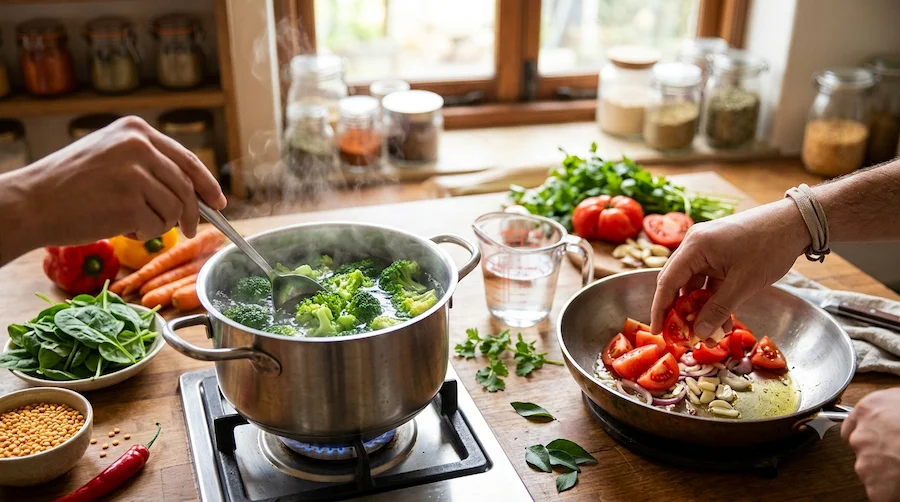
Do you worry that all your careful shopping; the fresh vegetables, the whole grains, the nuts and seeds; is being undone the moment it hits the stove?
It is a genuine concern, but the truth is a little more layered than "cooking destroys nutrients," and once you know how it actually works, you can cook the way you already do (with some mindfullness) and still prevent excess loss of nutrients.
I hear some version of this worry constantly: "Cooking dsetroys nutrients and all the nutrition is lost." It sounds sensible enough that most people never question it. But it is only partly true, and the part that gets left out is actually the more useful part.
Cooking doesn't destroy nutrition in any simple, one-directional way. Sometimes it does reduce certain nutrients. Sometimes it makes other nutrients easier for our body to use than they were in the raw food. And very often, the nutrient hasn't vanished at all. It has simply moved out of the food and into the water it was cooked in.
What actually affects food when it is cooked?
A few different things are going on at once, and heat is only one of them:
- Heat breaks down some nutrients. Vitamin C is a good example. It is sensitive to both heat and exposure to air.
- Water carries nutrients away. Vitamin C and folate are water-soluble, so if you cook food in a lot of water and pour that water down the sink, a lot of nutrients are lost in the disarded water.
- Cooking time matters. A quick blanch and a long simmer are not the same thing nutritionally, even for the same food.
- Other factors that add up oxygen exposure, acidity, how finely the vegetable is chopped, all play a small role in how much nutrient is retained.
A 2018 study in the journal Food Science and Biotechnology, by Lee and colleagues, tested exactly this across ten vegetables; blanching, boiling, microwaving and steaming; and found vitamin C retention ranging anywhere from almost nothing to over 91%, depending on the method. Boiling came out worst overall; microwaving and steaming did better simply because there was less contact with water.
So rather than asking the question "does cooking destroy nutrients?" It should be "which nutrient, in which food, cooked which way, for how long destroys nutrients?" That is the question worth asking in your own kitchen.
Where Indian cooking already has the answer?
Here is something most nutrition articles never mention: this whole problem largely solves itself in an Indian kitchen.
We don't just cook food and throw the water away. We make dal, sambar, gravies and curries in which the liquid used for cooking stays. If nutrients leach into that liquid and you consume the liquid, which is exactly what happens in most Indian homes, the whole calculation changes.
Boiling and draining is not the same thing as boiling and consuming the water. It is a small distinction, but it matters a great deal in practice.
And sometimes, cooking actually helps
Most of us assume raw is automatically the healthier choice, but tomatoes are a good example of why that isn't quite right. They contain lycopene, the carotenoid responsible for their colour. Cooking breaks down the tomato's cell structure in a way that makes lycopene easier for the body to absorb. Adding a little oil helps further, since lycopene is fat-soluble.
A 2005 study by Fielding and colleagues, published in the Asia Pacific Journal of Clinical Nutrition, had healthy volunteers eat tomatoes cooked with olive oil versus tomatoes cooked without it, over five days, and then measured blood lycopene levels. The olive-oil group showed a clearly bigger rise.
So your tomato curry is not nutritionally inferior to a bowl of raw tomato slices. For lycopene at least, it may well have the advantage.
This is the point I try to get across to my clients again and again: nutrient content and nutrient availability are not the same thing. A food can contain a certain amount of a nutrient on paper, but what your body actually absorbs and uses depends on how accessible that nutrient is once it is released from the food. Cooking can lower the measured amount of one nutrient while making another easier to use.
So should we eat everything raw?
No. Apart from the fact that most people would not enjoy eating raw dal, there are plenty of foods where cooking genuinely improves digestibility, texture and safety, and it also reduces certain compounds in plant foods that otherwise interfere with absorption.
More importantly, the healthiest cooking method is usually whichever one gets you to actually eat the nutritious food, regularly. If steaming broccoli means your family will eat broccoli, that is a win regardless of the exact retention percentage. If a light sauté is what makes vegetables enjoyable enough to cook daily instead of once a week, that matters more than any lab figure. And if your dal is pressure-cooked with the liquid left right in the bowl, there is nothing to worry about at all.
A few practical takeaways
- Use less water where you can. Steaming or a quick sauté retains more than a long boil in a large pot.
- Don't overcook out of habit. A shorter cooking time usually means better retention, without any loss of taste or texture.
- Consume the cooking liquid whenever it's part of the dish. Dal, sambar, kadhi, curries — the nutrients that leached out are still right there.
- Add a little healthy fat where it helps absorption think tomatoes, carrots, and other fat-soluble nutrient sources.
- And above everything, eat a variety of foods. Losing a little vitamin C from one vegetable matters far less than skipping vegetables altogether.
The NutriMantra takeaway
Cooking doesn't automatically make the food less nutritious. It changes the food sometimes for the worse, sometimes for the better, and very often it depends entirely on what is cooked and how it is cooked.
So the next time someone tells you, with complete confidence, that cooking destroys all the nutrients, you now have a better response than an argument.
Just smile and ask: "Which nutrients?"
Sources: Lee S, et al. "Effect of different cooking methods on the content of vitamins and true retention in selected vegetables." Food Science and Biotechnology, 2018. Fielding JM, Rowley KG, Cooper P, O'Dea K. "Increases in plasma lycopene concentration after consumption of tomatoes cooked with olive oil." Asia Pacific Journal of Clinical Nutrition, 2005.

Shruti Marjara Kushwaha
Nutritionist & Founder, NutriMantra
Shruti blends evidence-based nutrition with practical Indian food guidance, shaped by experience across AIIMS, VLCC, HealthKart, research, counselling, and long-term lifestyle support.
Need help applying this to your routine?
Book a consultation with Shruti for practical, personalised nutrition guidance tailored to your goals, food preferences, and health conditions.
Learn with Shruti


Related Articles
Healthy Eating Shouldn't Feel Like a Luxury
Let’s be honest: most of us have looked at a recipe, seen ingredients like kale or avocado, and thought, "My wallet and my kitchen aren't ready for this." At N…
Read article →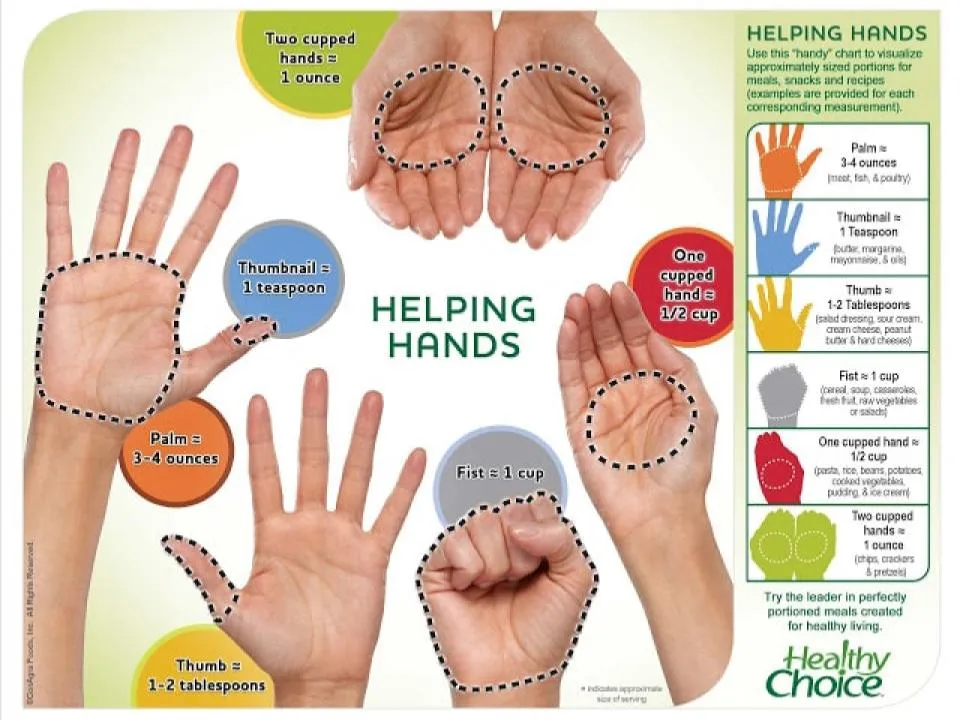
The Art of Portion Control: Eat Smart Without Feeling Deprived
Have you ever opened a family-size packet of chips and finished it in one go? You didn’t plan to finish it, but it happened anyway.
Read article →
The Role of Hormones in Weight Loss: What Everyone Should Know
“I have tried everything—but the weight just won’t come off!” If you have ever felt this way, you are not alone. And you are not imagining it.
Read article →
Comments (0)
No comments yet. Be the first to share your thoughts.
Leave a Comment
Your comment will appear after moderation.