Oryzanol: the new heart saver on the block

Our parents had little option to choose from when buying a cooking medium. I remember, there was homemade desi ghee, dalda, mustard oil and a few varieties of refined oils (which were still at a very nascent stage). But nowadays when we go oil shopping the mind boggles, looking at 'n' number of options and the health claims. The latest oil doing the rounds is rice bran oil with its heart-healthy component: oryzanol.
Heart Healthy benefits of Oryzanol
The health benefits of rice bran oil are heavily popularising it. The oil comes from rice bran, a byproduct of the rice milling process that converts brown rice to white rice. This oil contains oryzanol, which is a group of chemical compounds, found at concentrations of 1-2%. Researchers are extensively studying oryzanol for its various health benefits.
Intake of oryzanol has been known to significantly decrease total cholesterol, 'bad' (low-density lipoprotein, LDL) cholesterol, and triglyceride levels, which makes it heart-healthy. But its effects on 'good' (high-density lipoprotein, HDL) cholesterol levels are less clear. A few other benefits where evidence has been inconclusive include:
- Increasing testosterone (male reproductive hormone) and human growth hormone levels.
- Improving strength during resistance exercise training.
- Treating symptoms of menopause and aging.
Researchers need more evidence to rate the effectiveness of gamma oryzanol for these uses.
Researchers have documented the above-mentioned health benefits at high doses, which are difficult to achieve through diet alone. In all these studies, the diet was supplemented with oryzanol, with a daily dose of 300 mg given to observe cholesterol-lowering effects. However, people should exercise caution when taking oryzanol as a supplement, especially if they have an underactive thyroid. Instead, consuming foods like brown rice, wheat bran, rye, barley, which contain varying amounts of oryzanol, can help achieve the daily dose.
Like rice bran oil lots of oils are marketed for their heart-protective effect. But one needs to understand that oils pack in them lots of calories as well. The oils that have constituents like MUFA, omega-3,6,9, etc. definitely have an edge over cooking medium containing trans fats and saturated fats. But at the end of the day, they are oils. So watch before you eat.

Shruti Marjara Kushwaha
Nutritionist & Founder, NutriMantra
Shruti blends evidence-based nutrition with practical Indian food guidance, shaped by experience across AIIMS, VLCC, HealthKart, research, counselling, and long-term lifestyle support.
Trying to improve cholesterol, blood pressure, or overall heart health?
Shruti can help you translate nutrition science into an Indian meal pattern that supports long-term heart health.
Frequently Asked Questions
What is oryzanol and how is it beneficial for heart health in Indian diets?
Can I get enough oryzanol from my regular Indian diet?
Are there any side effects of taking oryzanol supplements for heart health?
What are some heart-healthy oils I can use in Indian cooking?
Learn with Shruti


Related Articles

Are You Cooking the Nutrition Out of Your Food?
Cooking doesn’t automatically drain nutrition. Use less water, avoid overcooking, and remember that dal, sambar and curries retain nutrients in their cooking liquid.
Read article →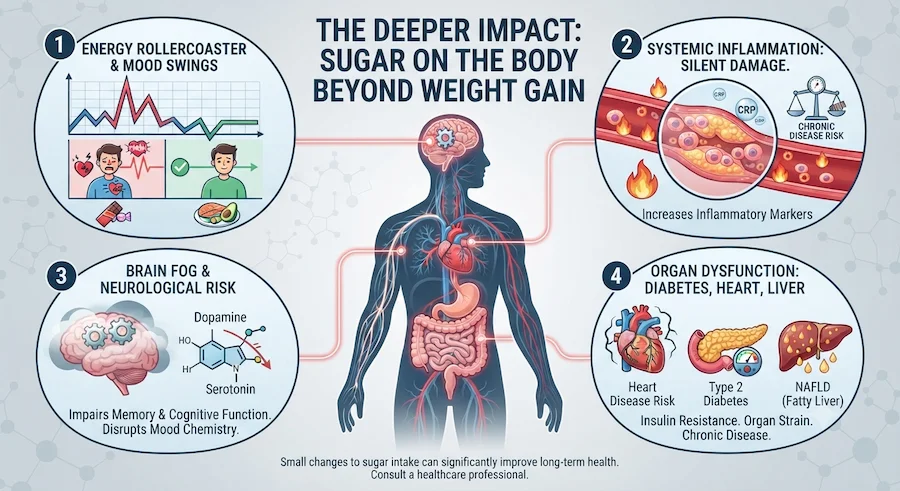
The Impact of Sugar on Your Body: Beyond Weight Gain
Cutting added sugar can smooth energy swings and help brain clarity; in India, swap sweetened coffee and juices for fruit, protein, and fiber.
Read article →
Menopause & Nutrition: Bones, Weight & What to Actually Eat
> The women who do best through perimenopause aren't the ones who change everything. They understand what's happening and make...
Read article →Comments (2)
Leave a Comment
Your comment will appear after moderation.
Sugandha · Sep 22, 2021 04:13 PM
Well written and explained.
Shruti · Oct 05, 2021 11:29 AM
Reply
Thank you :)